
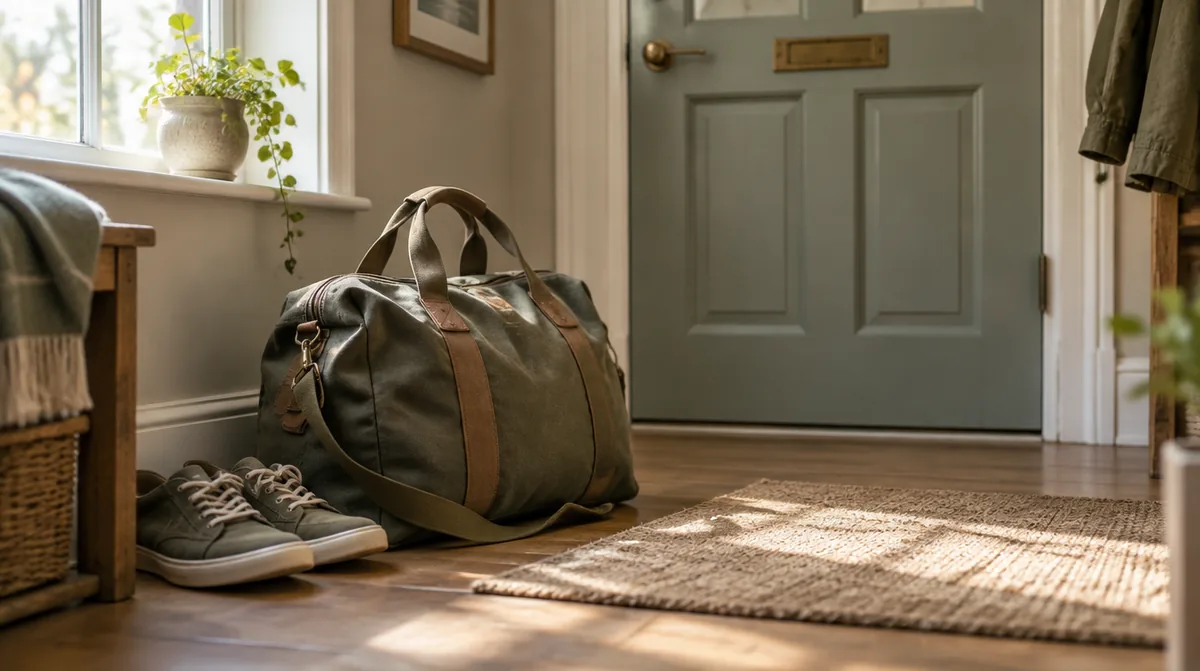
The decision is made. The bag is by the door. And the question underneath everything is simply: what is this going to be like?
The first week is the hardest part of residential treatment and the part people are told least about. Here is what generally happens, and the one thing worth knowing before you walk in.
The one thing to know in advance
Somewhere around day three, you will want to leave.
Not might. Will, most likely. By then the worst of the physical symptoms has usually eased, you are sleeping a little, and your mind produces an argument that feels completely reasonable: I have detoxed, I feel better, I can do the rest at home.
It is the most predictable moment in the whole stay, and it catches almost everyone — which is precisely why it is worth knowing now, while you are still deciding. The feeling is not evidence that treatment has worked. It is a stage of it.
Admission day
Expect it to take several hours and to involve a lot of questions.
Medical assessment. A full history — what you have been using, how much, how recently, previous withdrawals, other medical conditions, current medicines. Blood tests and physical observations are usual.
Answer this honestly, including the parts you would rather not say. Under-reporting is extremely common and it is genuinely dangerous: withdrawal management depends on knowing what is actually in your system. Nobody is assessing your character. They are calculating risk.
Belongings check. Bags are searched and some items held. Standard practice everywhere, and not personal.
Orientation. The rules, the timetable, where things are, who to ask.
Saying goodbye. Frequently the hardest part of the day for both sides. Keep it short; drawn-out farewells make the first night worse.
Days one to three: the medical part
Withdrawal depends heavily on what you have been using, for how long, and your physical health. That variability is exactly why this is done under supervision rather than at home.
What is consistent: withdrawal from alcohol and from some sedatives can be medically dangerous, which is the central reason unsupervised stopping is a bad idea. The World Health Organization treats alcohol dependence as a condition requiring clinical management, not willpower.
Expect frequent observation — pulse, blood pressure, temperature — including overnight. Medication is commonly used to manage symptoms and reduce risk. Sleep will be poor. Appetite will be unreliable.
Tell staff about symptoms rather than enduring them quietly. People often try to appear to be coping. There is nothing to be gained from it here, and something to lose. Our article on alcohol withdrawal and detox goes into this further.
Days four to seven: the psychological part
As the body settles, something less expected arrives. Many people describe the emotional week as harder than the physical one.
Feelings return. If substances have been managing anxiety, grief or anger for years, those arrive with nothing in front of them. This is disorientating and it is also the point at which actual treatment becomes possible.
Guilt and shame surface. Clear-headed reflection on the last few years is rarely comfortable. This is normal, it is survivable, and it is what the groups are for.
Mood swings. Common and usually settle over the following weeks.
Boredom and restlessness. The structured day starts to feel confining rather than supportive.
You will also begin group work properly. The first group is intimidating for everyone; nobody is required to say much at first.
What to pack
At SSHIMOH, we share our full packing list, including anything not permitted, before admission.
Confirm specifics with the facility, because policies vary. Generally:
- Comfortable clothing for a week or more, including something warm — buildings are often air-conditioned
- Toiletries, ideally alcohol-free (mouthwash and some products contain it and are usually not permitted)
- Any current medication in its original packaging, with prescriptions
- Identification and insurance documents
- A notebook and pen — more useful than people expect
- Photographs of people who matter to you
- Modest cash, if permitted
Generally not permitted: alcohol-containing products, anything sharp, unprescribed medication, and often laptops. Phones are usually restricted rather than banned.
For families
The first week is hard on you too, and a few things help.
Expect a call asking to come home. Plan what you will say before it arrives, and ideally agree it with the clinical team. "I love you and we agreed you would stay the week" is more useful than a debate at ten at night.
Do not interpret distress as a sign the place is wrong. Distress in the first week is expected. Genuine concerns about care are different and worth raising directly with staff.
Use the time. Family sessions exist because home patterns matter. Attending is not a formality.
Sort out the practicalities now. Fees, duration, what happens at discharge. See insurance and payment.
The first night
Worth describing separately, because it is the part people remember.
It is usually bad. You are in an unfamiliar bed, in a shared room, without the thing you have been relying on, and the adrenaline of the decision has worn off. Sleep is unlikely. Staff will check on you, which can feel intrusive and is the point.
Two things help. Knowing in advance that one dreadful night is normal, and not a verdict on the place or on the decision. And telling the night staff you are not sleeping rather than lying there — it is a clinical matter, not a complaint, and there is usually something they can do.
If it is not alcohol
Most writing about the first week assumes alcohol. Other substances behave differently, and the week feels different as a result.
Opioids. Withdrawal is intensely unpleasant — aches, cramps, sweating, agitation, broken sleep — and generally not dangerous in the way alcohol withdrawal can be. Medication is routinely used, and the physical course is often slower to settle.
Sedatives, including sleeping tablets. Withdrawal can carry serious risk, and reduction is usually gradual and carefully managed rather than abrupt. This group is the clearest case for not attempting it at home.
Stimulants. The physical picture is milder; the psychological one is not. Flat mood, exhaustion, heavy sleep and strong cravings are typical, and low mood in the first fortnight is common and usually lifts.
Cannabis. Often assumed to involve no withdrawal at all. In regular heavy users, irritability, poor sleep, vivid dreams and reduced appetite are well described, and settle over a couple of weeks.
In every case the sequence is the same: the physical week comes first, the emotional one follows, and it is the second that people underestimate.
Frequently asked questions
Will withdrawal be dangerous?
It can be, particularly with alcohol and some sedatives, which is why it is managed medically with observation and medication. That supervision is the main argument for doing it in a facility rather than at home.
Can I leave if I want to?
Where admission is independent, you have the right to request discharge. Facilities will usually ask you to discuss it first, and there may be a short period for assessment. Admission arranged under other provisions works differently.
Will I be given medication?
Commonly during withdrawal, and sometimes longer where there is an underlying condition. It is explained and discussed rather than imposed.
What if I cannot cope with the group?
Say so. Participation is usually built up gradually and nobody is forced to disclose anything on day one.
How soon will I feel better?
Physically, often within the first week. Emotionally, longer and less linearly. Most people describe the second and third weeks as considerably easier than the first.
Walking in
The first week asks you to tolerate being uncomfortable in a place where nothing is available to make it stop. That is the whole difficulty, and it is also the reason it works.
If you know in advance that day three will produce a persuasive argument for leaving, you are far better placed to sit through it. After that, what a day in rehab looks like describes the rhythm you settle into.