
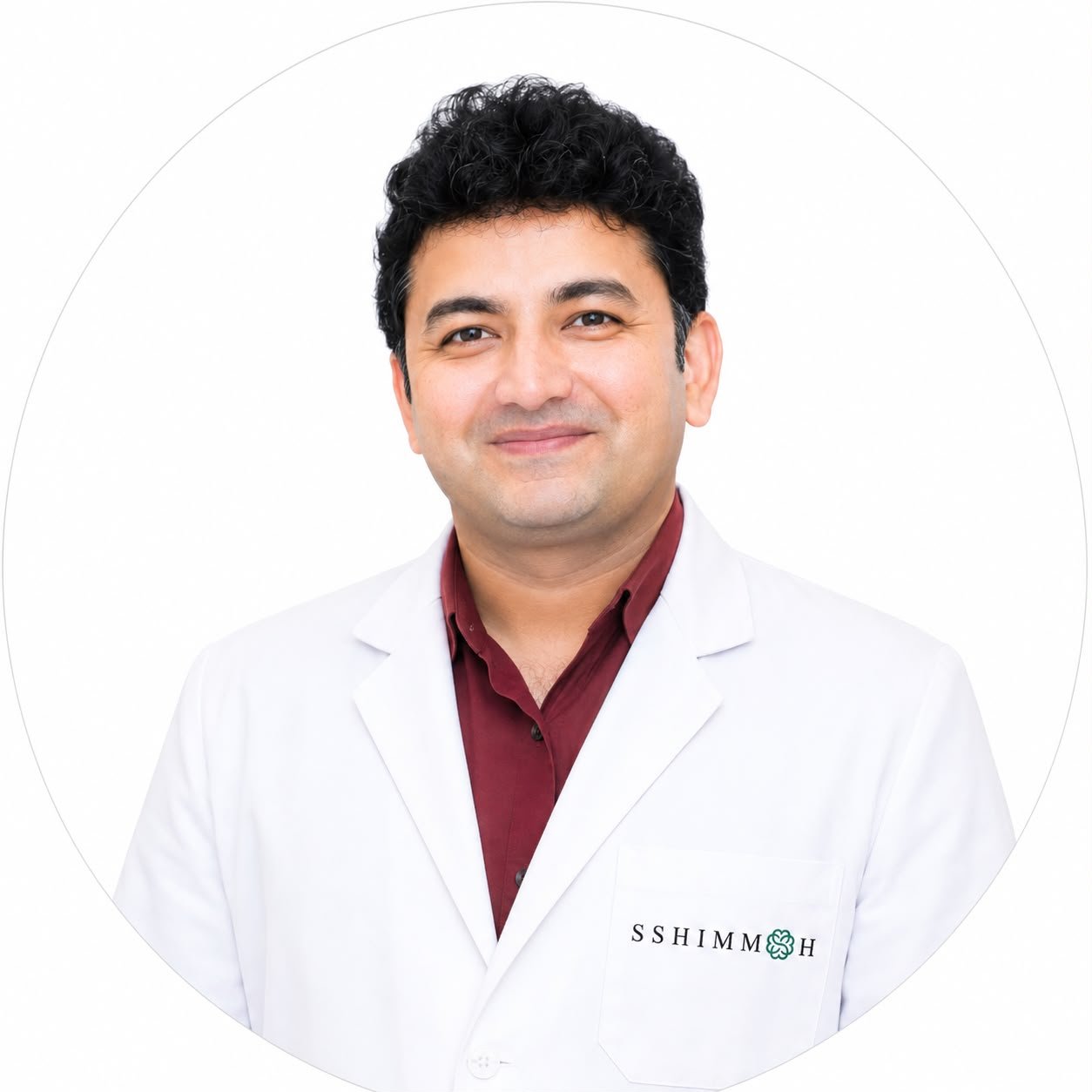
✓ Medically reviewed by Mr. Shourya Purohit – Clinical Psychologist, SSHIMOH, Noida.
Critical Incident Stress Management (CISM) is an adaptive, short-term psychological helping-process that focuses solely on an immediate and identifiable problem. Its primary purpose is to enable people to return to their daily routine more quickly and with less likelihood of experiencing post-traumatic stress disorder (PTSD) after a traumatic event.
Our trained CISM specialists provide rapid, structured interventions for individuals and groups who have experienced severe trauma—such as workplace accidents, natural disasters, or sudden loss. We use techniques like Critical Incident Stress Debriefing (CISD) to normalize acute stress reactions and facilitate psychological closure.

Interventions are most effective when conducted within 24 to 72 hours of the critical incident to process immediate shock.

We help survivors understand that their intense emotional and physical reactions are normal responses to an abnormal event.

Trauma Mitigation
Critical Incident Stress Management, often shortened to CISM, is a structured and supportive approach designed to help people cope in the aftermath of a traumatic or critical incident. A critical incident is any sudden, distressing event that overwhelms a person's usual ability to cope, such as a serious road accident, a natural disaster, a violent assault, a workplace tragedy, a medical emergency, or the unexpected death of a colleague or loved one. CISM is not a single technique but a comprehensive, phased system of care that begins close to the time of the event and continues for as long as a person needs support. Its aim is to reduce immediate distress, restore a sense of stability and control, and identify those who may benefit from further help.
At SSHIMOH in Noida, we understand that critical incidents do not respect schedules or circumstances. In a fast-moving city like Noida, where many residents work in demanding sectors such as healthcare, emergency services, security, manufacturing, corporate offices, and transport, exposure to distressing events is more common than people often realise. Indian families and workplaces also tend to encourage quiet endurance after a shock, which can leave the emotional impact unaddressed. CISM offers a compassionate, evidence-informed way to acknowledge what has happened, support natural recovery, and ensure that no one is left to struggle alone. Our team provides this care with cultural sensitivity, confidentiality, and genuine warmth.
CISM works on a simple but powerful principle: people recover more fully when they receive timely, structured support after a traumatic event rather than being left to cope in isolation. Most individuals are naturally resilient and will, with the right support, return to their previous level of functioning. CISM helps this recovery along by creating a safe space to process the experience, normalising the intense reactions that often follow, and offering practical strategies to manage distress.
The approach is grounded in the understanding that acute stress reactions after a critical incident, such as shock, intrusive memories, sleeplessness, irritability, or emotional numbness, are normal responses to an abnormal event. CISM does not treat these reactions as signs of weakness or illness. Instead, it provides early, supportive intervention that can ease suffering, strengthen coping, and reduce the likelihood that short-term distress develops into a longer-lasting difficulty. Importantly, CISM also serves as a gateway, helping to identify individuals who may need more specialised care and guiding them gently towards it.
CISM is best understood as a continuum of care, offered in stages that match a person's needs as time passes. The exact combination is always tailored to the situation, but the core elements typically include:
These elements are flexible. Some people need only brief reassurance, while others benefit from the full range of support over several weeks. The goal is always to meet each person exactly where they are.
CISM is relevant to a wide range of people, because critical incidents affect not only those directly involved but also those who witness, respond to, or are connected with the event. At SSHIMOH, we offer CISM support to many different groups, including:
Recognising that trauma ripples outward in this way allows us to offer support to everyone touched by an incident, not only those at its centre.
One of the strengths of CISM is its flexibility in offering both group and individual support, often in combination. Group sessions are particularly valuable when several people have shared the same experience, such as members of a workplace team or a group of survivors. In a carefully facilitated group, people often feel reassured to discover that their reactions are shared by others, which reduces feelings of isolation and self-blame. Hearing how colleagues are coping can also build a sense of solidarity and mutual support that aids recovery.
Individual support, by contrast, offers privacy and a slower, more personalised pace. Some people feel uncomfortable speaking in a group, or they may be experiencing reactions that are particularly intense or complex. In one-to-one sessions, our practitioners can give focused attention, explore an individual's specific concerns, and tailor coping strategies to their personality and circumstances. Many people benefit from a blend of both, and at SSHIMOH we discuss with you which combination feels right, never pressuring anyone to share more than they wish.
It is wise to consider CISM support in the days and weeks following any event that has left you or your team shaken, frightened, or unable to function as usual. You do not need to wait until distress becomes overwhelming. Early support is often the most helpful. Some signs that CISM may be valuable include:
If these reactions are present after a critical incident, reaching out is a sensible and healthy step. Where reactions are severe or long-lasting, they may overlap with conditions such as anxiety or recurrent panic, and our team can assess this carefully and guide you towards the most appropriate care.
It is important to understand that CISM is a form of early, supportive crisis intervention and not a replacement for longer-term psychological therapy. For many people, timely CISM support is enough to help them recover and move forward. For others, particularly when symptoms persist beyond a few weeks or when a person has a history of trauma, more structured treatment is needed. CISM acts as a bridge in these situations, identifying those who would benefit from ongoing care and connecting them with it smoothly.
When continued treatment is required, our clinicians may recommend evidence-based therapies such as Cognitive Behavioural Therapy, which helps people understand and gently change the distressing thoughts and avoidance patterns that can follow trauma. Where appropriate, our psychiatrists can also assess whether additional support, including medication, would be helpful. The transition from immediate CISM support to ongoing therapy is handled with care, so that you experience a single, joined-up journey of recovery rather than a series of disconnected steps.
At SSHIMOH, CISM is delivered by a multidisciplinary team that combines clinical expertise with deep compassion. We appreciate that the period after a critical incident is delicate, and we approach every person with patience and respect, never rushing the process. Our practitioners are mindful of the social and cultural context of life in Noida and across India, where stigma around emotional distress can still prevent people from seeking help. We work to make that first step feel safe and natural.
What sets our care apart is the seamless link between immediate crisis support and our full range of mental health services. Because CISM at SSHIMOH sits within a complete clinic rather than operating in isolation, we can move from early support to specialised therapy or psychiatric care without you having to retell your story to strangers or navigate referrals on your own. Confidentiality is central to everything we do, and we offer support to individuals, families, and organisations alike, including tailored programmes for workplaces wishing to support their teams after a difficult event.
From your first contact with us, our priority is to help you feel safe, heard, and supported. We begin by listening carefully to what has happened and how it has affected you, without judgement and at a pace that feels comfortable. Together, we agree on the kind of support that suits you best, whether that is a brief defusing conversation, a structured group session, one-to-one care, or a combination of these. We check in on your progress and remain available as your needs change, adjusting our support and arranging further care if it is needed.
You do not have to carry the weight of a traumatic event alone, and you do not need to wait until you feel overwhelmed before reaching out. If you, your family, or your team have been affected by a critical incident, our compassionate team in Noida is here to help. To take the first step towards recovery and stability, you can book a consultation with us today.
Not exactly. CISM is a form of early, structured crisis support offered soon after a traumatic event to ease distress and aid natural recovery. Counselling and therapy are usually longer-term processes. CISM often complements therapy and can help identify when ongoing treatment would be beneficial, with a smooth handover to that care at SSHIMOH.
CISM is generally most helpful when it begins close to the time of the event, often within hours or days. Immediate support and defusing happen early, while structured group discussions usually take place a little later. That said, it is never too late to seek support, and we can help even if some time has already passed since the incident.
No. CISM is always offered with respect for your comfort, and you are never pressured to share more than you wish. Some people find it helpful to talk through their experience, while others prefer to focus on coping strategies. Our practitioners follow your lead and create a safe space where you remain in control.
Yes. Many organisations in Noida ask us to support their staff after a workplace accident, a serious injury, or the loss of a colleague. We offer tailored CISM programmes for teams, including group sessions and individual support, and can also provide guidance to managers on how to support their people in the aftermath of a difficult event.
Not at all. Distress after a critical incident is a normal human response to an abnormal event, not a sign of weakness or illness. CISM simply gives that natural reaction the support it deserves. Seeking help is a sign of strength and self-awareness, and most people who receive CISM recover well.
If your reactions persist or feel too much to manage, that is exactly the moment when further support helps. CISM acts as a bridge to our wider services, and our clinicians can assess your needs and recommend ongoing care, such as therapy or psychiatric support. You will be guided through every step, with continuity of care from a team that already knows your story.
Expertise meets empathy. Our world-class team is here for you.

Fill out the form below and our intake coordinator will reach out to you within 24 hours.