
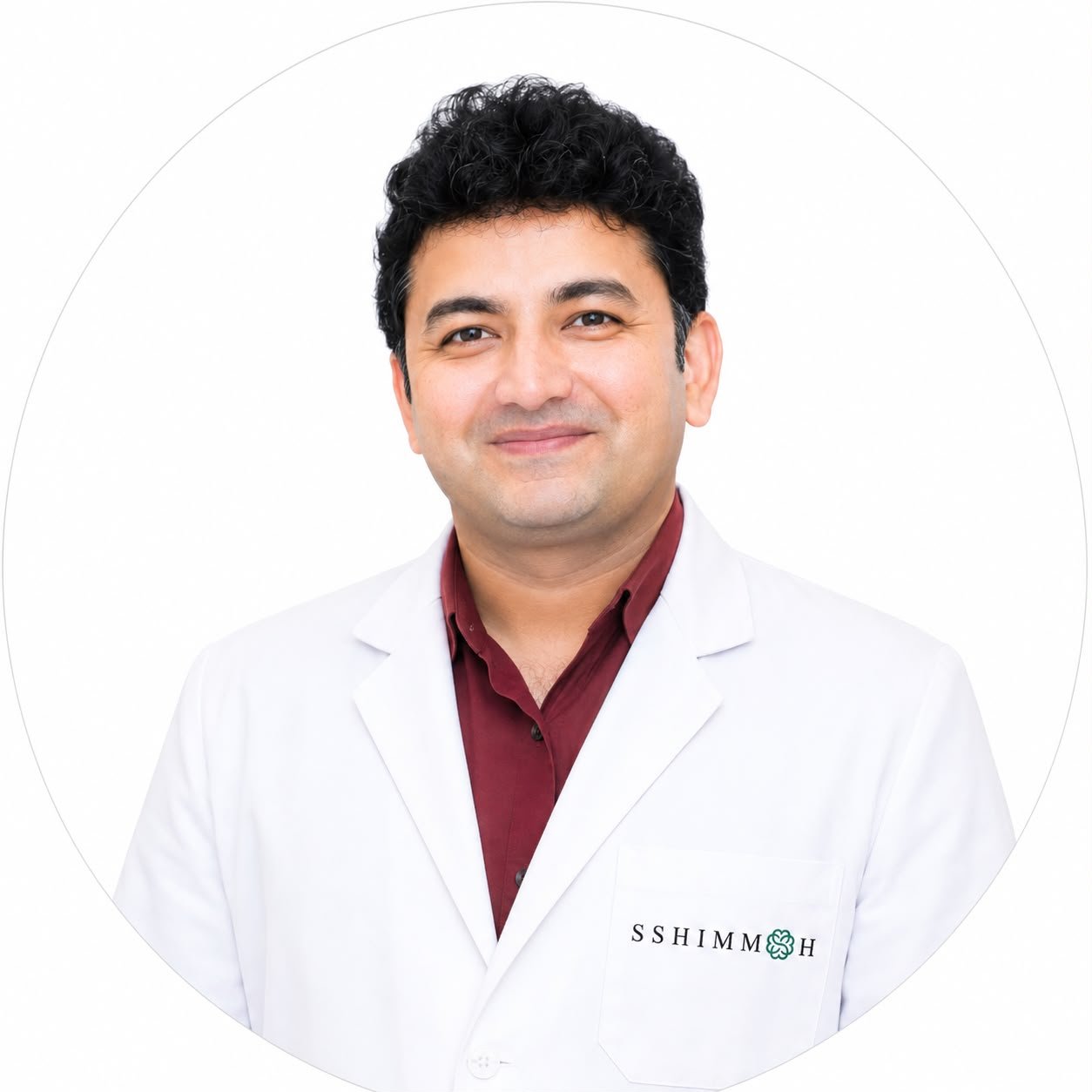
✓ Medically reviewed by Dr. Nikhil Nayar – Senior Consultant Psychiatrist, SSHIMOH, Noida.
Schizophrenia can be frightening and confusing, both for the person experiencing it and for those who love them. Yet with timely diagnosis and the right care, many people lead stable, meaningful, and fulfilling lives. At SSHIMOH, our specialist team in Noida offers expert, compassionate, and non-judgemental support, helping you understand the condition and walking with you and your family through every stage of recovery.
Schizophrenia care works best when it is consistent, coordinated, and built around the whole person rather than the diagnosis alone. At SSHIMOH, we begin with a thorough, confidential psychiatric assessment to understand exactly what you or your loved one is experiencing. From there, we create an integrated, long-term plan that combines antipsychotic medication, evidence-based psychotherapy, psychosocial rehabilitation, and active family involvement. Our psychiatrists and psychologists work as one team, reviewing progress regularly and adjusting care as recovery unfolds. Our focus is on reducing symptoms, preventing relapse, and helping each person rebuild a stable, dignified, and independent life.

Schizophrenia affects each person differently, so generic care is rarely enough. We begin by carefully understanding your symptoms, history, and goals, then build a treatment plan grounded in proven psychiatric and psychological approaches. Our team coordinates medication, therapy, and rehabilitation so that every element of your care works together to support stability, recovery, and long-term wellbeing.

Few conditions carry as much misunderstanding and stigma as schizophrenia, and we work hard to counter it. SSHIMOH offers a warm, confidential, and respectful environment where you and your family can speak openly without fear of judgement. We listen carefully, explain things in plain language, and treat every person with the dignity they deserve, so that care feels like a genuine partnership.

Specialized Care
Schizophrenia is a serious but treatable mental health condition that affects the way a person thinks, perceives the world, feels, and behaves. It can change how someone interprets reality, sometimes causing them to hear voices, hold beliefs that others do not share, or withdraw from the people and activities they once enjoyed. Although schizophrenia is often misunderstood, it is fundamentally a brain disorder, not a character flaw, a weakness, or the result of bad parenting. Importantly, schizophrenia does not mean a "split personality" or a "dangerous" person, despite how it is often portrayed in films and the media. With timely diagnosis, the right treatment, and steady support, a great many people with schizophrenia go on to study, work, build relationships, and lead meaningful and fulfilling lives.
In India, schizophrenia is still surrounded by a great deal of stigma, fear, and misinformation, which can stop families from seeking help until symptoms become severe. This is one of the most damaging myths we work to undo. Schizophrenia is a recognised medical condition, much like diabetes or epilepsy, and reaching out for care is a sign of courage, not shame. At SSHIMOH in Noida, we believe that every person living with schizophrenia deserves expert, compassionate, and respectful care, and that recovery, stability, and hope are genuinely possible.
The symptoms of schizophrenia are usually grouped into three categories. A person may experience some or all of these, and their intensity can change over time. Understanding them helps families respond with patience rather than fear.
Positive symptoms involve experiences that are added to a person's reality and may include:
Negative symptoms involve a reduction in normal functioning and may include:
Cognitive symptoms affect memory and thinking and may include:
Schizophrenia often develops gradually, and early signs can be subtle and easy to miss or mistake for ordinary stress or adolescence. Recognising them early can make a meaningful difference, as prompt treatment is linked to better outcomes. Warning signs may include a noticeable drop in performance at work or in studies, growing social withdrawal, increasing suspicion of others, unusual or illogical statements, neglect of personal hygiene, disturbed sleep, and a general sense that the person is "not themselves." These changes do not automatically mean schizophrenia, but if they persist or worsen, a professional assessment is wise.
There is no single cause of schizophrenia. Research shows it arises from a combination of factors that affect how the brain develops and functions. Understanding this can help reduce the blame and guilt that families often carry. Common contributing factors include:
There is no single blood test or scan that can confirm schizophrenia. Diagnosis at SSHIMOH begins with a careful, confidential, and unhurried psychiatric assessment. A specialist listens closely to the person and, with consent, to their family, exploring the nature of the symptoms, how long they have been present, and how they affect daily life. We also rule out other medical conditions, thyroid problems, and substance use that can produce similar symptoms. This thorough process ensures the diagnosis is accurate and that the treatment plan is tailored precisely to the individual.
Schizophrenia is a treatable condition, and most people improve significantly with consistent, comprehensive care. Treatment is most effective when several approaches are combined and continued over time. Our specialist Schizophrenia Treatment brings these elements together into one coordinated plan.
From your very first visit, our goal is to help you and your family feel safe, respected, and hopeful. After a thorough assessment, we discuss a clear, long-term plan together and adjust it as recovery progresses. Our multidisciplinary team in Noida combines genuine clinical expertise with warmth and patience, and we remain by your side through every stage, including relapse prevention and ongoing support. Schizophrenia is a journey, and you do not have to walk it alone. If you are ready to take the first step, you can book a consultation with us today.
While the word cure is rarely used in mental health, schizophrenia is very manageable. With consistent treatment that combines medication, therapy, and support, most people experience significant improvement in their symptoms and can lead stable, meaningful, and fulfilling lives.
No, this is a common and harmful myth. Schizophrenia is not a split or multiple personality. It is a brain disorder that affects how a person thinks, perceives, and experiences reality. Most people with schizophrenia are not dangerous, and with treatment they live ordinary lives within their communities.
Antipsychotic medication is the cornerstone of treatment and is important for controlling symptoms and preventing relapse. Many people benefit from longer-term medication, but the type and dose are reviewed regularly and adjusted to each person. Decisions are always made together, with clear information and your comfort in mind.
Yes. Many people with schizophrenia study, hold jobs, maintain relationships, and live independently. Recovery looks different for everyone, but with the right treatment and support, leading a productive and satisfying life is a very real and achievable goal.
Families play a crucial role. You can help by learning about the condition, encouraging consistent treatment, maintaining a calm and supportive home, recognising early warning signs, and treating your loved one with patience and respect. Looking after your own wellbeing matters too, and our team is here to guide and support you throughout.
Expertise meets empathy. Our world-class team is here for you.



Fill out the form below and our intake coordinator will reach out to you within 24 hours.